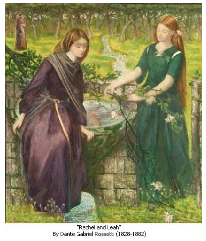
The first book of the Bible, Genesis, talks about seven women: Sarah, Hagar, Rebekah, Leah, Rachel, Bilah, and Zilpah. These women are revered as reverend matriarchs who are held responsible for the moral events in the lives of those around them. Their prayers fall unto God’s ears differently and their pleas on behalf of their husbands, brothers, and sons are often heard and answered wherein the prayers of men tend to fall on deaf ears. The talents bestowed upon these women has earned a great place of power in the world. Later the Bible reveals the Mother of God as He Walks on Earth- Mary and the power and need of women as holy vessels and creatures uniquely attuned to God is put on display once again. With such prominent roles in the Holy Tome, women hold prominent position within the Church of the Holy See, the Catholic Church; they are recognized as the Voice of the Lord Almighty in this physical realm and as the Great Matriarchs over the family of Catholic children that they tend to.
Priestesses and bishops are largely responsible for the day to day operations of church business and services. Higher ranking officials are more responsible for political matters and tending to the needs of Catholic States and also working with world leaders to further expand the influence of the church by converting and creating new Catholic States. Within the Holy See today, there are seven cardinals who are said to represent the women of Genesis. The church is led by the Pope who has had a number of titles bestowed upon her position- Holy Matriarch, Great Mother, Queen Regent of the Catholic States- just to name a few.
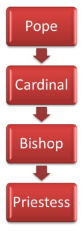
Women representing the Catholic Church take three vows upon entering.
- Vow of Poverty. Women of the church are expected to hold no position of financial gain outside the walls of the Church. They must leave as the women of the Bible had done and depend on the generosity of the men, women, and townspeople in their lives to provide from them. As the village of the Church spans states and nations, the care offered by the villagers can be vast and the women of the Church display a wide range of wealth in their personal dress and style as it could be insulting to refuse a gown or a bauble from a local nobleman or council member.
- Vow of Celibacy. This vow is heavily debated within the church itself and some expect the Pope to make a ruling about this vow. The intent was for the church matriarchs to keep their minds and bodies pure so that they might be the purest vessels for the word of God the Almighty- but as the Pope is the only true voice of God- that the argument claims that only the pope need to remain unwed to dedicate her time to God. Progressives in the church also claim that many of the Biblical matriarchs were themselves married and that their marriages did not impede the word or acts of God through them.
- Vow of Obedience. The vow of obedience is taken when a woman joins the church. Many bishops and cardinals join the church from the ranks of the powerful and noble within Catholic States. These women make excellent politicians and negotiators for the Church. But to prove their neutrality- they swear a vow of obedience to the Church- forsaking claims that their kings, doges, fathers, or brothers might hold over them. For some women in the Church, this vow is quite liberating.